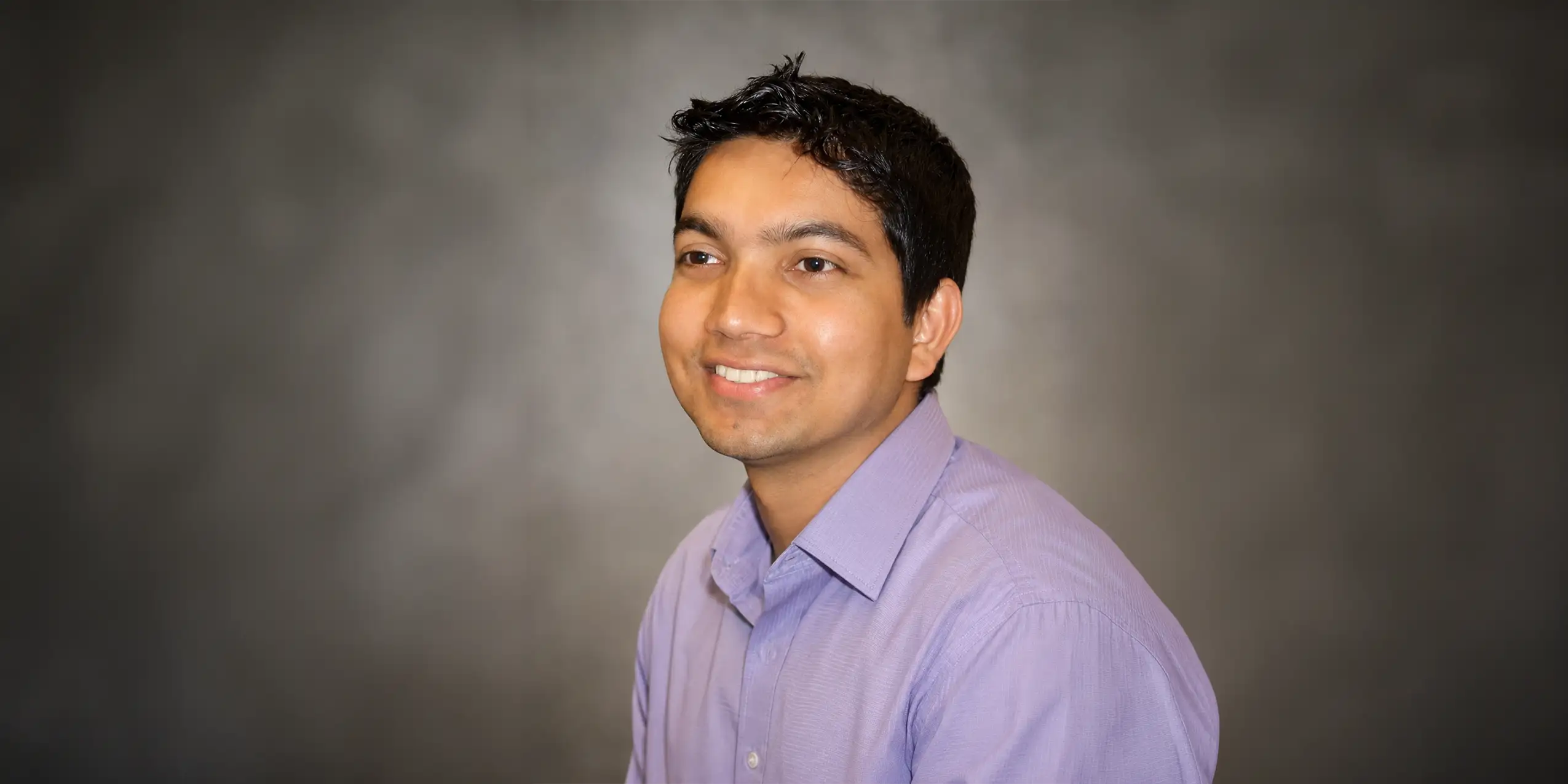
Pritamber “Pritam” Adhikari’s story began in Bhutan, but displacement shaped much of his childhood.
At just two years old, he was forced into exile with his family and later grew up in a United Nations refugee camp in Nepal. Like many refugee children, he faced barriers that could easily have limited his future. But Pritam refused to let hardship define what was possible.
After resettling in Atlanta, Georgia, in 2008, he graduated in the top 10% of his high school class. He later began studying aerospace engineering through a joint academic program involving Oglethorpe University and Georgia Tech.
Pritam was not only a gifted student. He was also a volunteer, a community-minded young leader, and someone who believed education should be used to help others.
His life was cut short when he passed away from colon cancer at the age of 22.
But his dream of serving others did not end with him.
In 2021, his sister, Indira Adhikari Subedi, and his lifelong friend, Dev Bhandari, co-founded the Pritam Adhikari Education Foundation America.
Today, the PAEFA nonprofit carries his values forward by supporting Bhutanese refugee education, community health, and opportunities for underserved families in the United States, Bhutan, Nepal, and refugee camps.
Bridging the Healthcare Gap for Resettled Communities
For refugee and immigrant families, accessing healthcare is rarely as simple as making an appointment.
Language barriers, lack of insurance, transportation challenges, unfamiliarity with the healthcare system, and fear of unexpected costs can prevent families from seeking help early.
A treatable health concern can become far more serious when reliable information and care remain out of reach.
PAEFA responds to these challenges through community-based health education and outreach.
Its health and wellness programs have addressed breast cancer awareness, mental health, substance abuse prevention, diabetes, high blood pressure, asthma, women’s health, vaccinations, and emergency life-saving skills.
The goal is not simply to distribute information. It is to make health education understandable, culturally relevant, and useful in everyday life.
Turning Health Education Into Real Access
At the Harvest Community Health Fair in Clarkston, Georgia, PAEFA provided breast cancer awareness education and helped register more than 40 uninsured women for free mobile mammograms.
This work was carried out alongside community partners, including Mosaic Health Center, Refugee Women’s Network, Emory Health, and other organizations serving refugee and underserved families.
That distinction matters.
Awareness is important, but awareness becomes far more powerful when a woman without health insurance is also connected to an actual screening.
PAEFA also participated in the Bloom into Better Health Community Health Fair in Clarkston on March 28, 2026.
Organized by Mosaic Health Center, the event brought nonprofits and health partners together to improve access to health education, preventive care, and community wellness resources.
These community health workshops in the Atlanta area are built around trust.
Families are more likely to ask questions and seek support when they feel respected, understood, and welcomed. That is where grassroots organizations can make a meaningful difference.
Breaking Barriers Through Scholarships in Refugee Camps
Education can change the direction of a young person’s life, but talent alone does not pay tuition, purchase school supplies, or cover transportation.
For many students living in refugee camps or low-income communities, even a small financial barrier can interrupt years of hard work.
PAEFA’s Sponsor a Refugee and educational scholarship programs help students continue their studies through scholarships, tutoring, school supplies, mentorship, career guidance, and life-skills support.
Its educational work reaches young people in Bhutan, Nepal, and refugee communities, including the Beldagi and Pathari refugee camps.
The students supported through these programs are not defined by what they lack.
They are young people with goals, responsibilities, and a strong desire to improve life for their families and communities.
Kushum Subba: Education as a Way to Lift Her Family
Kushum Subba is an 18-year-old student from Beldagi Refugee Camp.
After losing her father, she continued pursuing her education while living in a family led by her single mother.
Despite these challenges, Kushum has taken on leadership roles at school and remains committed to her studies.
Her goal is not only to build a better future for herself. She also wants to support her family and serve the refugee community around her.
Her story reflects the quiet strength found in many refugee students.
They study while carrying responsibilities far beyond the classroom. They worry about family finances, younger siblings, transportation, and whether they will be able to afford the next stage of their education.
Still, they continue.
Roshnee Gurung: Moving Forward Despite Hardship
Roshnee Gurung is a 22-year-old student from Beldagi Refugee Camp.
Despite growing up through hardship, she remains determined to continue her education, support her younger siblings, become self-reliant, and serve her community with pride.
Her ambitions have been shaped by difficult circumstances, but they are not limited by them.
When donors support refugee students like Kushum and Roshnee, they are not simply paying for books or tuition.
They are giving a student breathing room.
They are helping a young person remain in school instead of being forced to choose between education and immediate family needs.
They are also helping build confidence, independence, and the possibility of a different future.
How One Young Man’s Legacy Creates Lasting Impact
Pritam’s life was brief, but the values he lived by continue to reach people he never had the chance to meet.
Every health workshop, scholarship, school supply package, and student mentorship carries part of his belief that education should lead to service.
The impact often begins with something small.
A set of school supplies may help a student complete the academic year without falling behind.
A scholarship may allow a young person to pursue vocational training, complete high school, or continue into higher education.
Health education materials may help a family recognize warning signs earlier or feel more confident asking a healthcare provider the right questions.
A free mammogram may give an uninsured woman access to a screening she otherwise would have postponed.
PAEFA’s giving examples show how practical support can reach people directly.
A $50 contribution can help provide health workshop materials for approximately 20 participants.
A $100 contribution can support a student’s school supplies for a year.
A $500 contribution can help cover vocational scholarship support for a refugee student.
These are not abstract outcomes.
Behind every number is a student trying to remain in school, a mother seeking reliable health information, or a family navigating a system that was not designed with them in mind.
That is why PAEFA’s work matters.
It brings resources closer to the people who need them and creates opportunities rooted in dignity, respect, and practical support.
Join PAEFA in Supporting Refugee Students and Healthier Communities
Pritam’s journey from a refugee camp in Nepal to studying aerospace engineering in the United States shows what can happen when ability is met with opportunity.
PAEFA is working to create that opportunity for others.
You can help support refugee students by contributing toward scholarships, school supplies, tutoring, mentorship, and career guidance.
You can volunteer at a community health event, help organize educational programs, support outreach, contribute professional skills, or partner with PAEFA through a school, nonprofit, health department, or community organization.
You can also sponsor a student or make a one-time or recurring donation to strengthen PAEFA’s education and community health programs.
The Pritam Adhikari Education Foundation America is a tax-exempt 501(c)(3) nonprofit organization.
Pritam believed education should create a path toward service.
Today, every student supported, every family connected to care, and every volunteer who steps forward helps keep that belief alive.